Almost nobody walks into a birthday photoshoot feeling naturally photogenic. The people whose photos look effortless are usually not more confident — they just know a handful of small adjustments that do most of the work.
The problem is never your face
Most posing anxiety isn’t really about how you look. It’s about not knowing what to do in the seconds between “smile” and the shutter going off. Fix the not-knowing, and the awkwardness mostly disappears on its own.
Weight, hands and angle: the three fixes that matter
Almost every flattering portrait comes down to three adjustments, repeated in different combinations.
Weight on the back foot
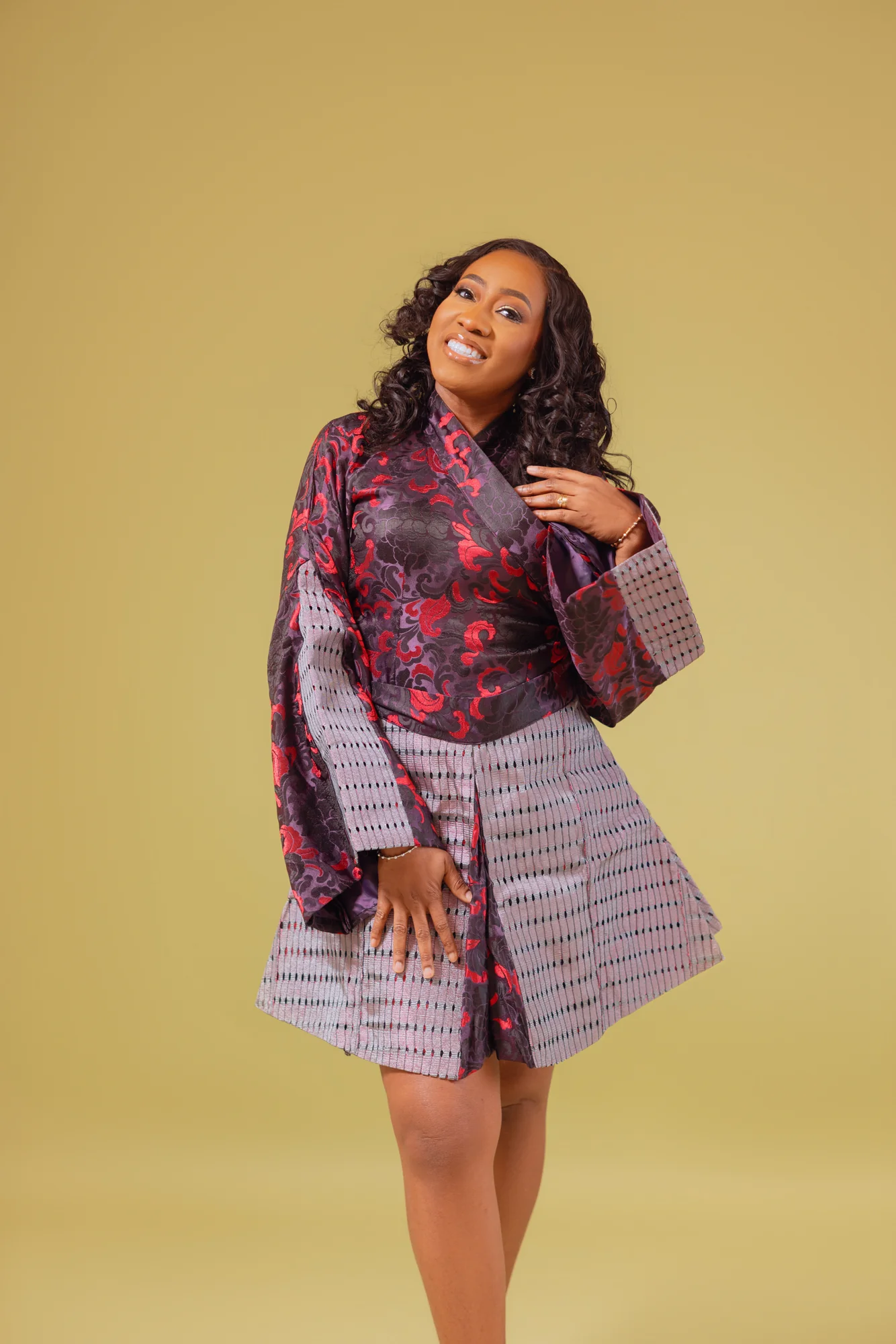
Standing with weight evenly on both feet reads as stiff. Shifting weight onto the back foot, with the front knee slightly soft, creates a natural lean that looks relaxed rather than posed — even though it’s entirely deliberate.
Give your hands a job
Empty hands at your sides look tense in almost every photograph. Holding something — a drink, a bouquet, the edge of a jacket, your own opposite wrist — solves the “what do I do with my hands” problem instantly.
Turn slightly, don’t face the camera dead-on
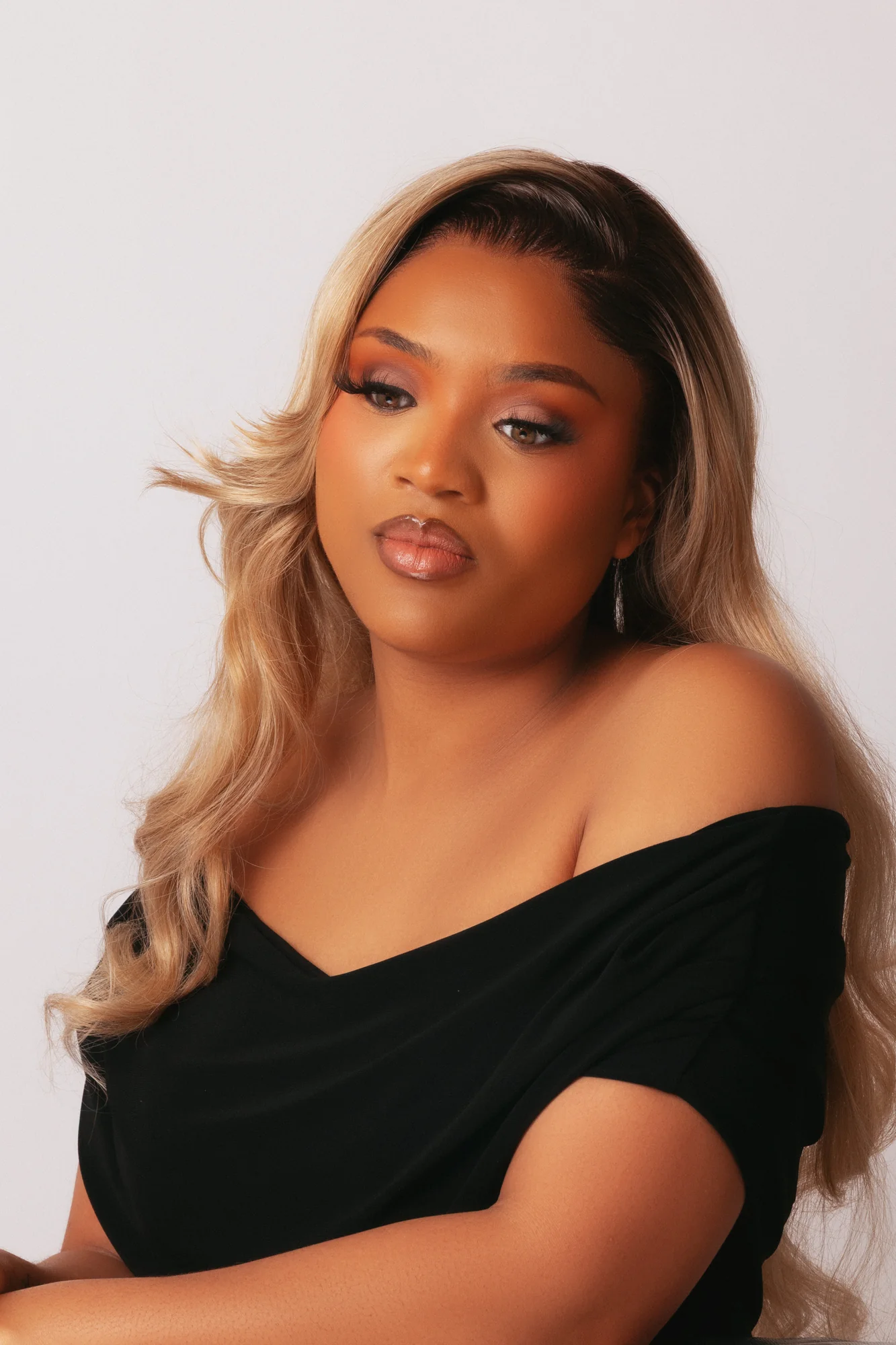
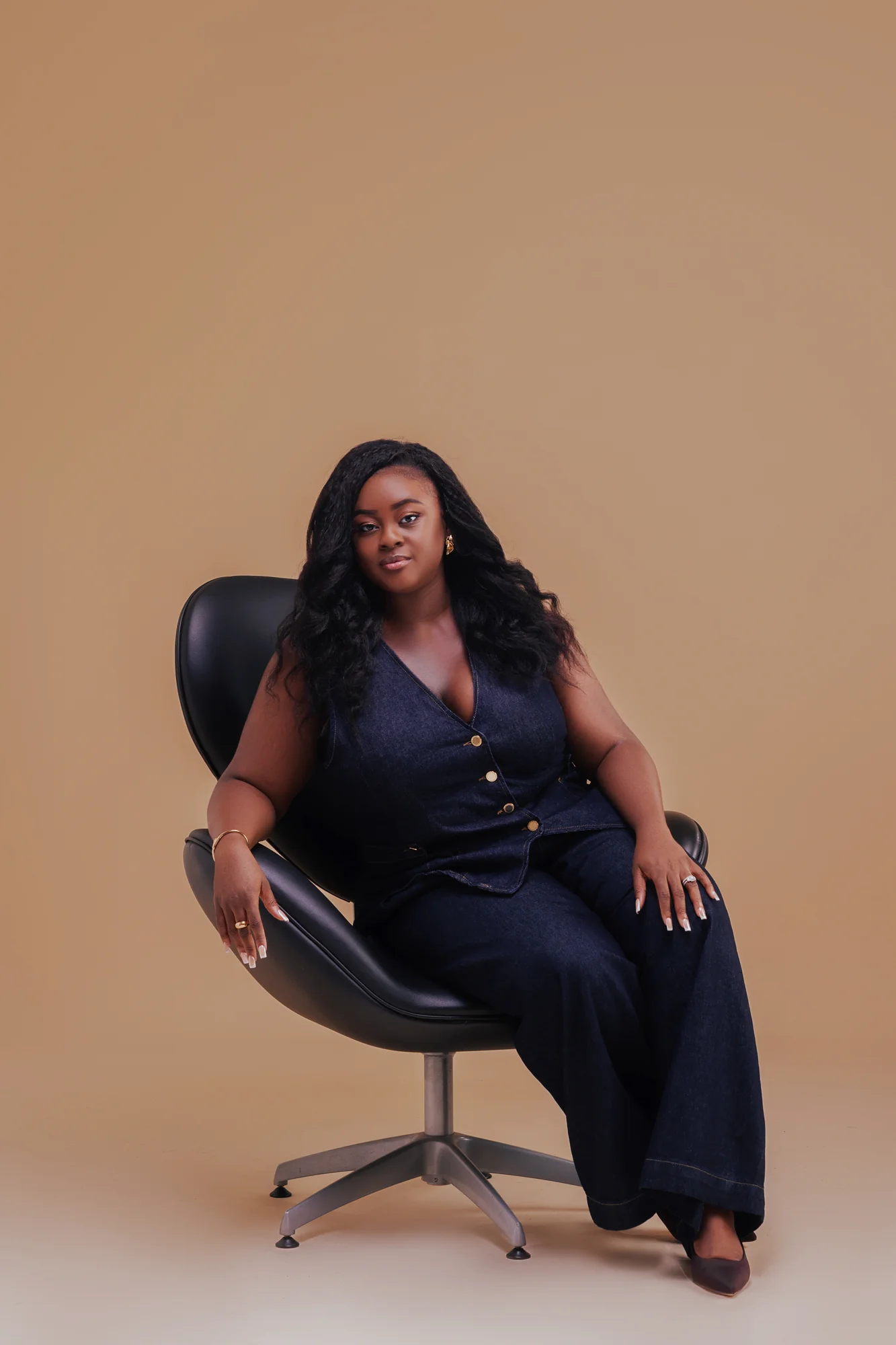
A body angled 30–45 degrees to the camera, with the face turned back toward the lens, is more flattering for almost every body type than shooting straight on. It’s a small adjustment with an outsized effect.
Working with what you’re insecure about
Specific concerns have specific, well-tested fixes — you don’t need to solve them all yourself on the day, but knowing they exist helps you feel less exposed.
If you don’t like your smile
A closed-mouth smile, a slight smirk, or looking just off-camera and laughing at something genuinely funny all photograph better than a forced grin held for too long.
If you’re self-conscious about your midsection
A slight twist at the waist, one hand resting on the hip, or holding an object at chest height all naturally slim the silhouette without looking like you’re hiding.
If you don’t know where to look
Alternate between looking directly at the lens, looking just past it, and looking at a person or object in the room. A whole session of dead-on eye contact looks stiff; variation looks natural.
Group and couple posing basics
Multiple people in frame create their own posing problems, mostly solvable with a bit of forward planning.
Uneven heights
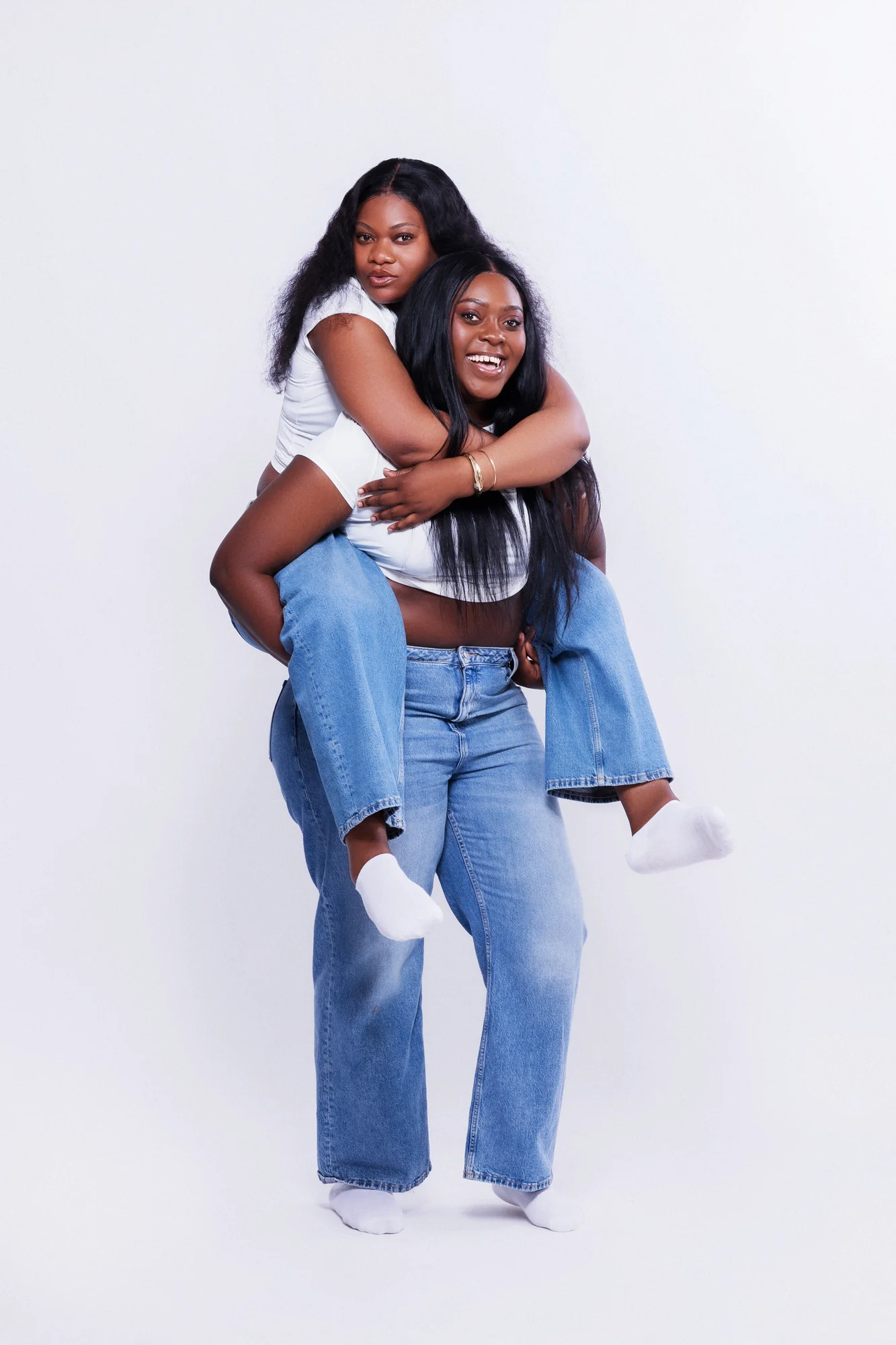
Taller people can bend a knee, sit, or stand a step back rather than everyone standing rigidly straight — small height staggering reads better than a perfectly level line-up.
Overlapping bodies
A small gap between people looks separated and awkward on camera. Slight overlap — a shoulder behind another’s, an arm around someone — reads as warm and connected instead.
Give everyone a moment
In a group, plan at least one frame where each person is looking at the camera individually, not just the wide group shot. These individual moments are often the ones people ask for afterwards.
What your photographer is already doing for you
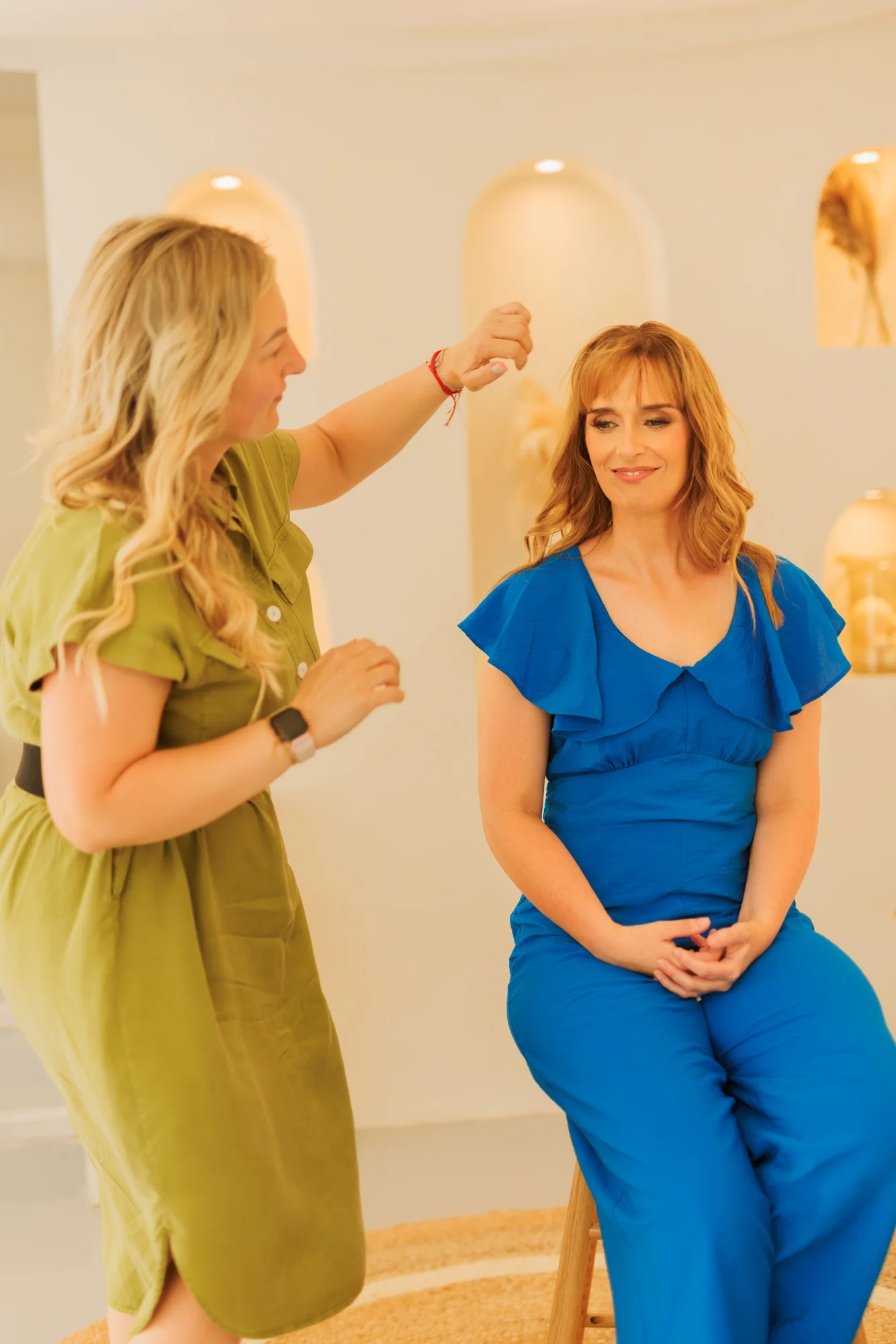
A good portrait session isn’t just you performing poses — your photographer is actively directing throughout, adjusting posture, angle and expression in real time.
Trust the direction
If you’re told to drop a shoulder, turn your chin, or relax your hands, it’s because the camera is seeing something you can’t feel from the inside. Small adjustments that feel strange to you often look completely natural in the resulting image.
Movement beats stillness
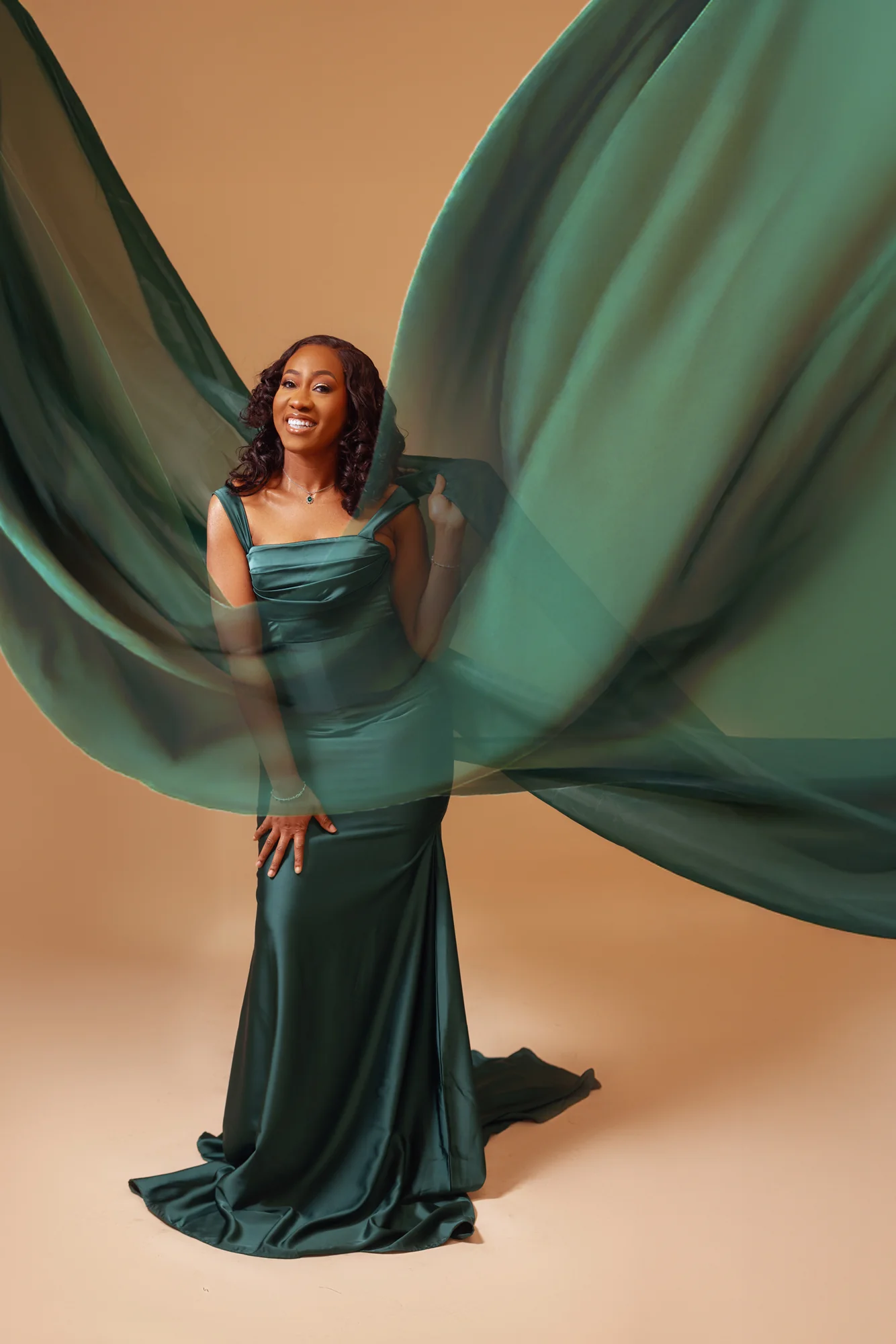
A held, static pose almost always looks less natural than a small continuous movement — a slow turn, a walk toward camera, hair settling after a toss. Ask for a few movement-based frames alongside the still ones.
Worth skipping
- Practising poses extensively beforehand. A few reference photos help; over-rehearsing usually looks stiffer, not better.
- Holding a smile for too long. Genuine expressions fade fast — many short bursts beat one long held grin.
- Standing dead square to the camera. Almost always the least flattering angle for any body type.
- Ignoring your hands. Empty, awkward hands undermine an otherwise good pose more than almost anything else.